
An op-ed, short for “opposite the editorial page”, is a written prose piece, which expresses the opinion of an author usually not affiliated with the publication’s editorial board.
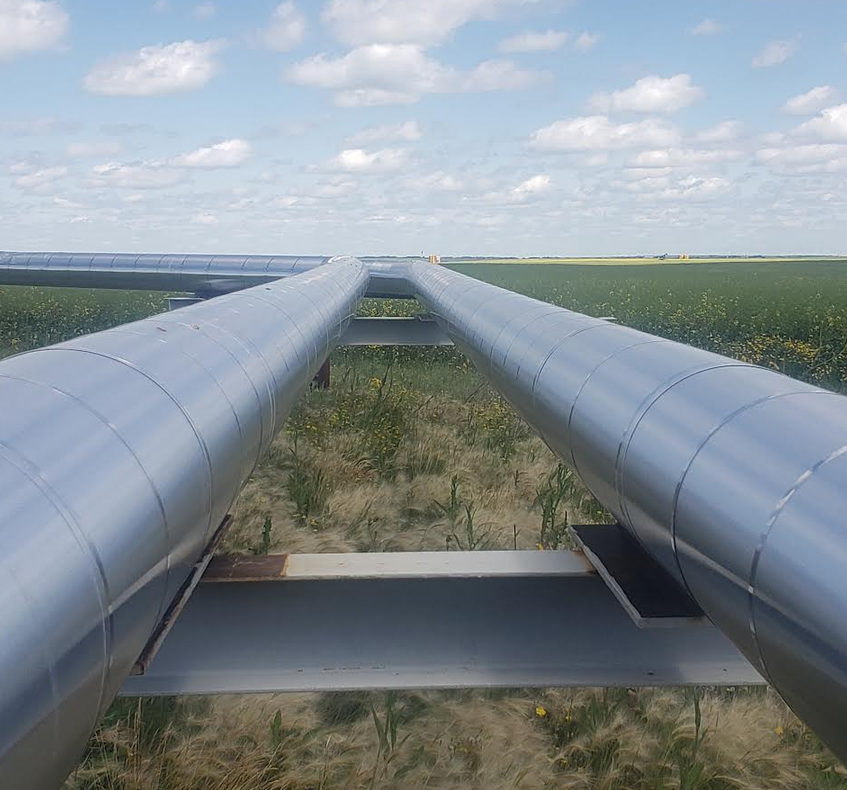
Heavy oil pipeline infrastructure. Curtis Boyes (2022)
There have been many recent headlines concerning global conflict, economics and energy security. One of the larger conversations receiving comparatively little attention, however, concerns the United States Strategic Petroleum Reserve (SPR).
Created in 1975 following the 1973–74 oil embargo, the SPR was designed as national insurance against severe petroleum supply disruptions. Today, the reserve consists of federally owned crude stored across four Gulf Coast sites in Texas and Louisiana, using 60 underground salt caverns connected to pipeline, terminal and marine infrastructure. While owned by the Department of Energy, many parts of the SPR are leased out to external companies (e.g. ExxonMobil leased Bayou Choctaw infrastructure).
Historically, the SPR has been used through both sales and exchanges.
The 2022 emergency drawdown released approximately 180 million barrels through direct sales. The government received cash for those barrels and later began purchasing replacement crude separately. DOE reported an average 2022 sale price of approximately US$95 per barrel and an average subsequent purchase price of US$76.89 for more than 47 million replacement barrels.
The current 2026 drawdown is structured differently.
The United States committed 172 million barrels as part of a coordinated international response to disrupted global oil flows. Rather than selling the oil outright, DOE has been awarding exchange contracts. Under this arrangement, participating companies borrow SPR crude and must return replacement crude, plus additional premium barrels.
Under these exchange contracts, the DOE expects approximately 200 million barrels to be returned to SPR storage facilities spread across fiscal year 2027. The first 45.2-million-barrel tranche alone requires 55 million barrels to be returned. On paper, this appears attractive: release 172 million barrels during a crisis and receive approximately 200 million barrels back without a direct taxpayer-funded repurchase.
This structure isn’t without risk. It transfers market risk to those crude oil marketers purchasing contracts and potentially creates a second-order energy security risk for 2027.
The SPR held approximately 415 million barrels when the exchange program began. A full 172-million-barrel withdrawal would leave roughly 243 million barrels before accounting for other receipts, withdrawals or operational restrictions that are already in place.
This matters because the reserve’s physical inventory is not the same as its immediately deliverable inventory.
A May 2026 Government Accountability Office assessment found that aging infrastructure, construction outages, low cavern volumes and crude-quality concerns were already limiting the SPR. As of December 2025, DOE estimated effective drawdown capability at only 61% of its design rate, while more than one-quarter of the inventory was temporarily unavailable for drawdown. In addition, its distribution capacity is sitting at 53% of its effective design rate. Much of the current inventory within the SPR is high-vapor-pressure crude with little to no blendstock which creates more delivery constraints. Cavern instability, well integrity issues and residual solids from blendstocks also add more variability into how much longer pump pressure can be maintained in the system to extract more crude oil.
Now consider a plausible stress scenario:
Global commercial inventories remain depleted through 2027. Oil rises above US$100 per barrel (or any value substantially higher than what we’ve seen in 2026). Marketers must collectively acquire approximately 200 million barrels to satisfy their SPR obligations.
If DOE enforces repayment on schedule, those companies would remove crude from an already stressed and tight commercial market and transfer it into government storage. Spread across one year, 200 million barrels represents over 500,000 barrels per day exiting global markets to refill the SPR. This value outpaces the current effective fill capacity rate of 440 million barrels per day, as listed in the government accountability office report (26-106918).
This proposes a few issues:
- Reinforce backwardation and upward pressure on prompt prices;
- Intensify competition between refiners, governments and import-dependent countries;
- Increase losses and collateral requirements for inadequately hedged contractors; and
- Worsen inflation, transportation costs and trade deficits globally.
Alternatively, if marketers cannot fulfill their obligations (There will be differences between a hedged vs unhedged marketer) and DOE delays or restructures the returns, more oil remains in the commercial market but the United States is left with a substantially depleted strategic reserve and less ability to respond to another war, hurricane, export interruption, shipping crisis or any major event that stresses an already stressed energy market.
This is the central SPR conundrum:
Enforcing repayment during a shortage could worsen the shortage. Delaying repayment could preserve near-term supply while weakening the world’s largest emergency petroleum reserve. Though not inevitable, global inventories may rebuild, prices may remain manageable and marketers may already have adequate physical or financial hedges.
The effectiveness of this strategy depends on three assumptions:
- Replacement crude remains available in 2027;
- Marketers remain financially and operationally capable of returning it; and
- Rebuilding the SPR does not coincide with another major global supply disruption.
An exchange contract does not eliminate the cost or risk of replacing the oil. It changes who initially carries that risk and when the market must absorb it. The question on risk absorption is the large variability at play here.
Falling short of everything listed here. The next 1.5 years are going to be spicy. Buckle up and be prepared!
Curtis Boyes is a Saskatoon based Geologist.